How Team Building Improves Teamwork and Communication
Understand how team building strengthens collaboration, communication, and trust, helping employees align efforts and work together more effectively.

Written by Spark Writes
Understand how team building strengthens collaboration, communication, and trust, helping employees align efforts and work together more effectively.
Written by Spark Writes
Overview
- Team building strengthens collaboration, adaptability, and shared responsibility within teams. Structured activities help employees work more effectively across projects while developing leadership skills.
- When applied consistently, these insights translate into everyday performance.
- Spark PH designs people-centered programs that turn team-building experiences into lasting workplace growth.
Most teams struggle not from a lack of skill, but from weak unity. Limited collaboration and minimal connection reduce how effectively team members support one another.
Here at Spark PH, we understand how team building improves teamwork and communication. We help draw insights from each session that operations directors can use to improve not only workplace behavior, but also their employees’ bonds. Continue reading to learn more!
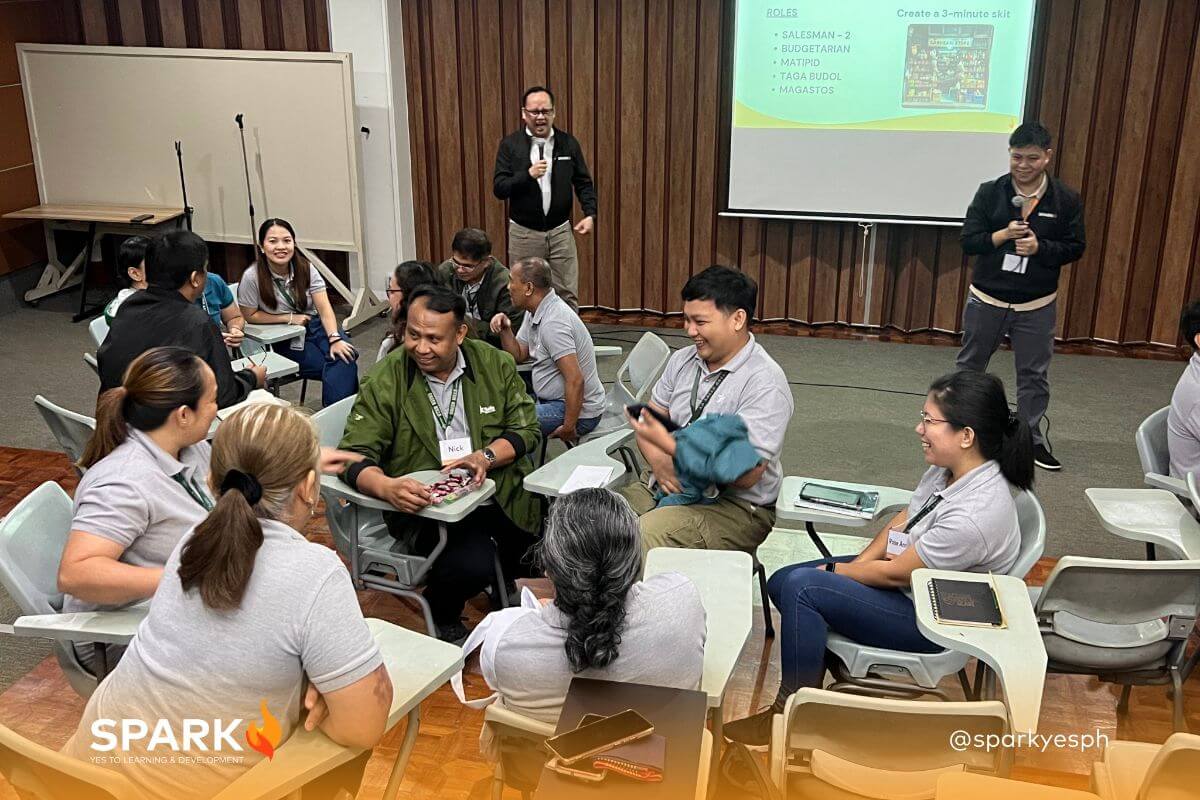
When employees experience structured exercises with one another, they learn to communicate more clearly. Scenarios that require idea sharing and coordination show the possible hurdles they face when sharing information. These give them good ideas on how to adjust their approach in real time.
Setting a stage that normalizes constructive feedback gives participants the chance to give and receive helpful criticism. Shared activities, like open forums or communication games, provide a supportive and enjoyable environment for employees to express openness and transparency.
One of the main reasons why some projects progress slowly is that members have a difficult time expressing and sharing ideas with the rest of the team. Interactive activities help “break the ice” for team members and set a lighter atmosphere for feedback-based learning. Employees learn to integrate comments into their work rather than shrink away from them.
Such activities promote accountability and prevent small miscommunications from becoming urgent concerns for the entire company.
Group exercises can help departments see how connecting with teams outside of their own improves overall processes for everyone. Each department typically works in isolation. However, some activities cannot be fulfilled by one sole group. Removing the boundaries between teams and treating each other as a collective whole helps participants understand how their roles impact one another. By creating spaces for awareness, they return to routines with an insightful perspective on mutual support.
Such efforts become more effective when guided by structure. Team-building facilitated by experts like Spark PH provides the perfect setting for employees to work toward shared objectives. These activities encourage workers to trust and rely on one another, all while connecting their skills across functions. As a result, they are more likely to be proactive in supporting the organization’s goals with greater efficiency.
Joint problem-solving exercises show the value of combining individual skills to work toward common goals. Teams that experience success in collaborative activities tend to replicate these habits as soon as they get back to the office.
Trust grows when employees overcome challenges that require cooperation, from problem-solving exercises to group obstacle courses. These activities place members in situations where success depends on mutual reliability, shared effort, and consistent follow-through. Experiencing each other’s dependability firsthand helps participants internalize the value of trust.
As employees demonstrate commitment and support during these exercises, they gain confidence to rely on each other in actual workplace scenarios. They become more willing to share information openly, collaborate on complex tasks, and, most importantly, claim individual responsibility.
Role-based challenges uncover employees’ true capabilities, including hidden talents and leadership potential. Directors discover which employees excel at things like strategic thinking and collaboration. Finding these strengths allows leaders to determine which tasks employees excel at and which areas they can improve on, so that each employee can maximize their skills to the best of their abilities.
When workers recognize their own abilities and see how their peers can contribute, teams coordinate each other’s responsibilities more effectively. Aligning each other’s individual strengths toward a similar objective not only increases efficiency but also gives everyone a sense of purpose.
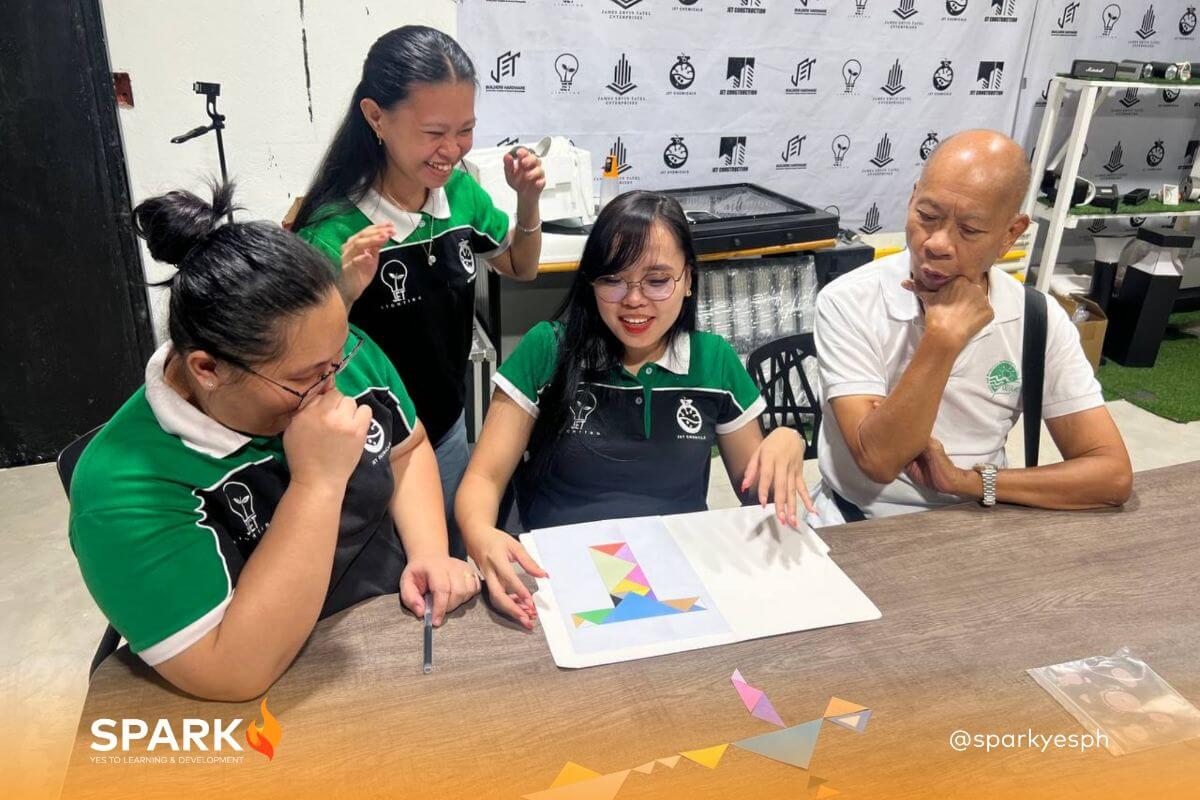
Providing team members with opportunities to guide their peers allows them to practice decision-making and accountability. For operations managers, such activities give them key insight into which members have the potential to become leaders in the company in the future.
Team bonding gives leaders a special way to work alongside their teammates as equals, which is crucial for breaking down hierarchical barriers. Taking part in these group activities shows that team representatives value everyone’s input and concerns. This promotes transparency and creates safe channels for everyone to contribute ideas more freely.
Employees see that their insights are respected, and as a result, feel more confident speaking up in meetings and project discussions.
Activities like “Desert Survival” or “Escape Room” challenges improve teamwork by requiring groups to discuss options, negotiate priorities, and make collective decisions under time pressure. As they coordinate and share ideas, they practice listening and conflict resolution on the spot. These shared experiences effectively hone their collaboration skills by the time they return to the workplace.
Every employee must learn each other’s thinking styles to encourage cohesive group decision-making. Leaders can observe patterns and provide guidance where needed, but the key benefit is that the team itself improves its communication habits. This foundation ensures they respond more effectively to actual workplace challenges.
Understanding how team building improves teamwork and communication helps organizations foster stronger trust and leadership that lasts beyond the session. With proper guidance and meaningful participation, every member can apply learned insights to form stronger connections with the rest of the team.
Expert-facilitated programs form a foundation for departments to bond not only professionally but also personally. Connect with Spark PH today to design a tailored program that strengthens long-term team performance.
Browse related articles on leadership and personal development, offering fresh perspectives to help you lead with clarity and grow in your career.
Spark Writes
June 17, 2026
Understand the link between continuous learning and effective teaching practices to better equip professionals to improve students' learning experience.
Read More
Spark Writes
June 12, 2026
Teacher empowerment helps educators improve classroom responsiveness, support student needs, strengthen collaboration, and grow through professional development.
Read More
Spark Writes
June 5, 2026
Professional development helps educators build confidence through modern teaching strategies, classroom management, peer collaboration, and continuous skill growth.
Read More