6 Top Goals to Prioritize in Team Building Programs
Identify key goals to prioritize in team-building programs to strengthen collaboration, improve communication, and drive long-term organizational success.

Written by Spark Writes
Identify key goals to prioritize in team-building programs to strengthen collaboration, improve communication, and drive long-term organizational success.
Written by Spark Writes
Overview
- Team-building programs only deliver real impact when guided by clear, strategic goals. Without focus, activities can be fun but fail to improve trust among employees.
- By understanding and pursuing the top goals to prioritize, organizations can create stronger, more aligned teams. These goals not only improve performance but also strengthen culture and long-term operational efficiency.
- Partnering with Spark PH ensures each session is purposeful and designed to translate into measurable, lasting results.
Team-building efforts require clear objectives to produce meaningful results. Focusing solely on fun or exclusively on productivity often leaves participants without lasting insights or measurable growth.
That’s why operations directors need to know the top goals to prioritize in team-building programs. Not only does it ensure genuine learning, but it also guarantees that every exercise contributes to the organization’s lasting success.
At Spark PH, our team of expert facilitators turns each team-building session into a measurable step forward for your company. Continue reading to learn how to turn team-building into a strategic driver of success.
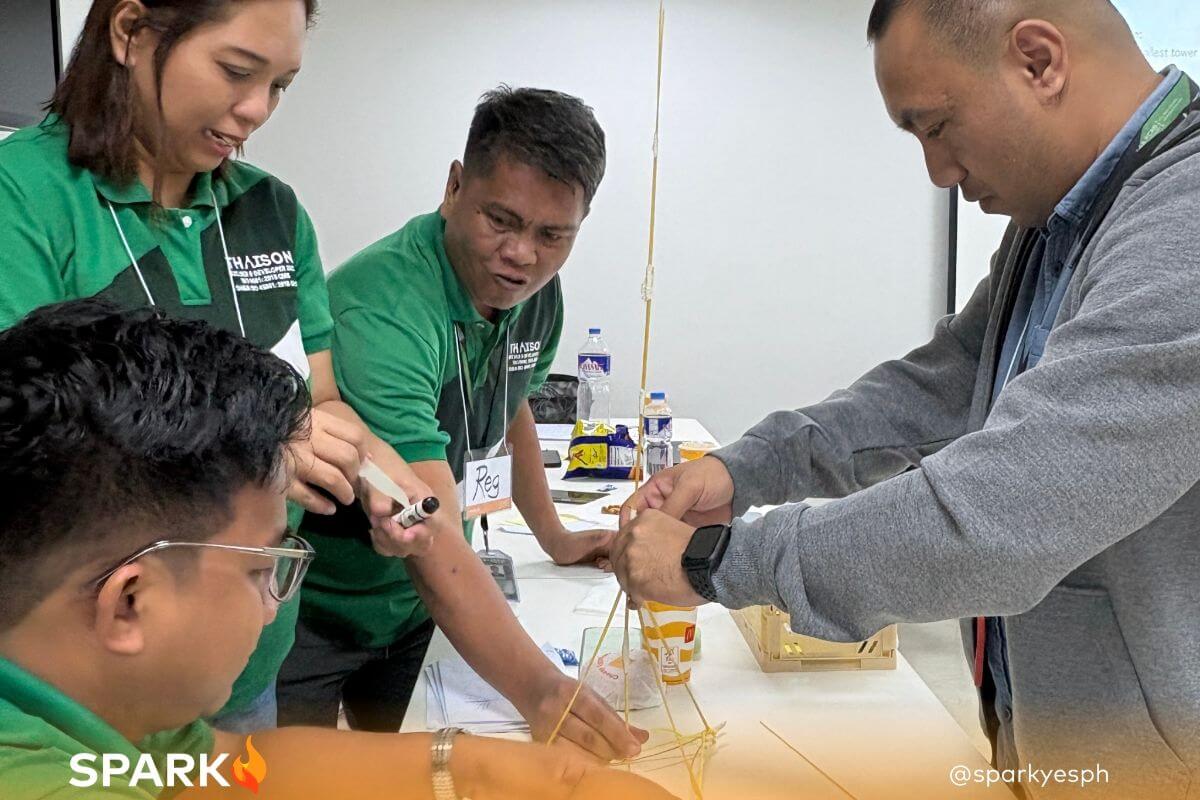
Effective communication and collaboration are the backbone of any high-performing team. Focusing on this goal in your team-building program allows you to address misunderstandings among your employees before they escalate.
As an operations director, your most important goal is to break down the barriers preventing your team from working in sync. It’s normal for employees to be separated into isolated “pockets.” However, this prevents them from seeing the bigger picture beyond their own unit. Without a proper breakthrough, they might fail to fully grasp the importance of understanding parts of the workforce outside of their own team.
Structured exercises, such as cross-department problem-solving challenges, promote information sharing and mutual understanding across teams. These planned interactions clarify interdependencies and accelerate aligned decision-making. As collaboration improves, overall cohesion strengthens, enabling the organization to achieve its priorities with greater efficiency.
Improving active listening equips teams to fully understand each other before providing feedback. Team exercises, such as reflective listening activities or paired discussions, help participants practice concentration and comprehension. These experiences build habits where employees listen with intent, encouraging careful interpretation and constructive responses.
Enhanced listening skills are an underrated but very critical part of fostering company culture. It’s important to make this a top priority for team improvement, as it creates a culture of inclusion and respect. Teams that master this skill are better able to collaborate smoothly, leading to better decision-making across projects.
Trust is the invisible glue that holds a team together, and prioritizing its development is key to improving overall company morale. When your program actively cultivates trust, your team members feel safer to admit to mistakes and contribute ideas without fear of reprimand.
It’s important to ensure that throughout the team building, employees feel heard and valued, whether by their direct superiors or by their colleagues. This empowers team members to openly acknowledge each other’s perspectives, and they become more likely to display higher loyalty and engagement. Around 76% of employees stay more engaged when their leaders and fellow team members express empathy.
Activities such as scenario simulations or experience sharing allow participants to see challenges from another’s viewpoint. These exercises encourage thoughtful engagement and improve problem-solving by fostering mutual respect. When members understand and support each other, collaborations result in consistent performance improvements and a more positive workplace culture as a whole.
Aside from team-wide skill improvements, what matters most in team-building is strengthening relationships among team members. When employees connect on a personal level, they feel more supported and motivated to work together. These connections directly impact team cohesion, making them a vital strategic goal in improving overall operations.
Simple group exercises like storytelling sessions and creative challenges provide structured opportunities for employees to share personal experiences and interests. Paired with the expertise of professional team-building facilitators, these reveal individual strengths that can directly benefit the team as a whole. Cultivating these bonds enables stronger communication and better team cohesion even after the sessions are over.
Above all, team-building programs work best when they’re strongly aligned with your company’s culture and long-term vision. This reinforces the principles and strategies that guide your organization’s success.
Embedding your core values into the program ensures employees truly internalize the organization’s principles. These serve as their guiding light in behavior and decision-making, making it critical for long-term alignment. When teams understand and practice these values, they act consistently in line with the company’s mission and vision. This strengthens trust, collaboration, and above all: a unified workplace culture.
Thorough seminars and reflection sessions give employees hands-on experience in applying company principles. These activities transform abstract values into tangible actions that guide their interactions, even after returning to the office. By achieving this goal, teams are better able to operate cohesively and consistently represent the organization’s culture for the better.
Confusion over responsibilities is a top cause of inefficiency, which makes clarifying roles a key objective in any program. Defining expectations ensures employees know their contributions and can coordinate effectively with colleagues. These help them identify their roles clearly, preventing duplicated efforts and improving accountability.
With clearly defined roles, teams are able to function more smoothly. Each member can feel confident as they fulfill their responsibilities to the best of their ability. This clarity prevents misunderstandings and ensures that each member’s strengths are used to their maximum potential.
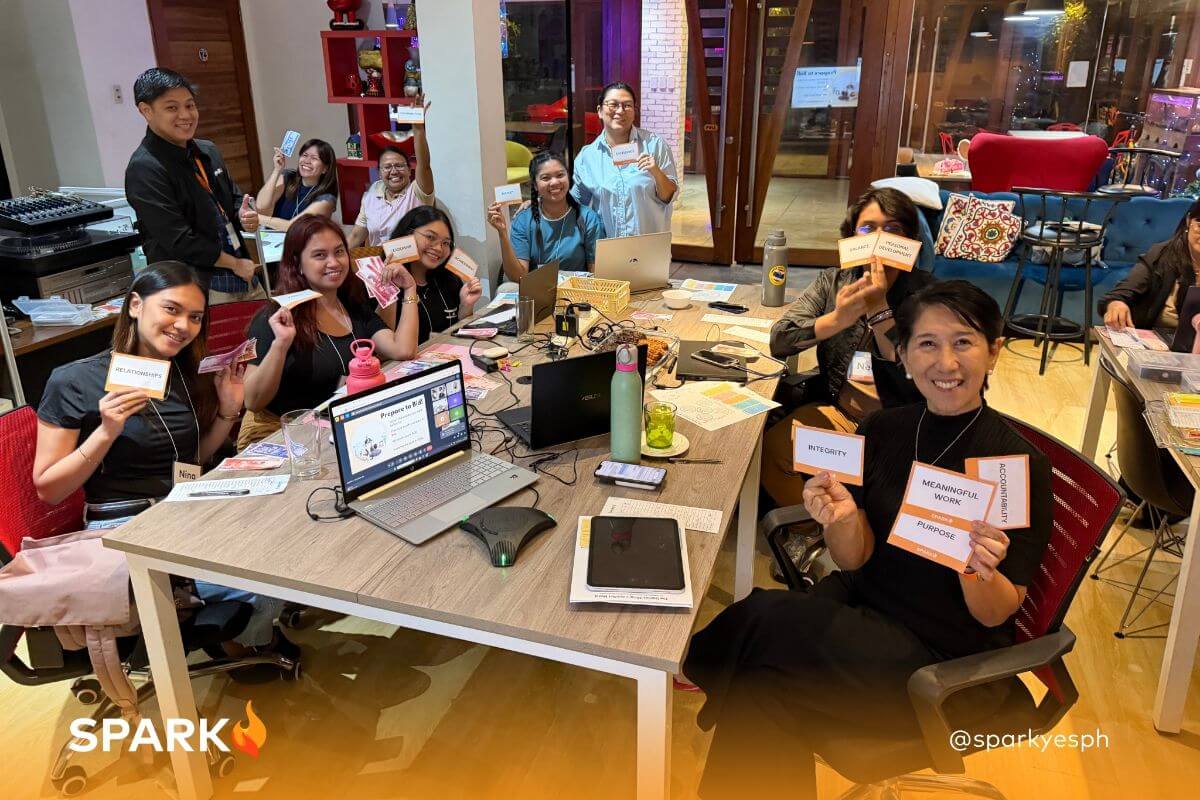
Partnering with Spark PH gives your team structured, engaging programs built for measurable results. Our facilitators design tailored activities aligned with your goals and team dynamics.
Each session develops practical skills and strengthens workplace collaboration, ensuring lasting impact beyond the training day.
Knowing the top goals to prioritize in team-building programs allows organizations to move beyond generic activities toward meaningful outcomes. Structured programs not only improve operational efficiency but also strengthen relationships in ways that propel individuals and the organization forward.
Ready to improve your team’s dynamics? Spark PH’s facilitators combine expert guidance with purpose-driven activities to help your team achieve alignment. Contact us today to explore how we can turn your workforce into a highly collaborative and united team.
Browse related articles on leadership and personal development, offering fresh perspectives to help you lead with clarity and grow in your career.

Spark Writes
July 30, 2026
Discover how 25 professionals broke through self-doubt and hesitation to unlock their leadership potential in a transformative SPARK U+ workshop.
Read More
Spark Writes
July 17, 2026
Discover what the future holds for skills certification in workforce development and learn how they build agile, future-ready teams through continuous learning.
Read More
Spark Writes
July 10, 2026
Explore the growing demand for verifiable skills in global job markets and discover how professionals can validate competencies employers seek worldwide.
Read More